

Financing Recovery in Latin America’s Climate Crisis
By: Antonio Vogt
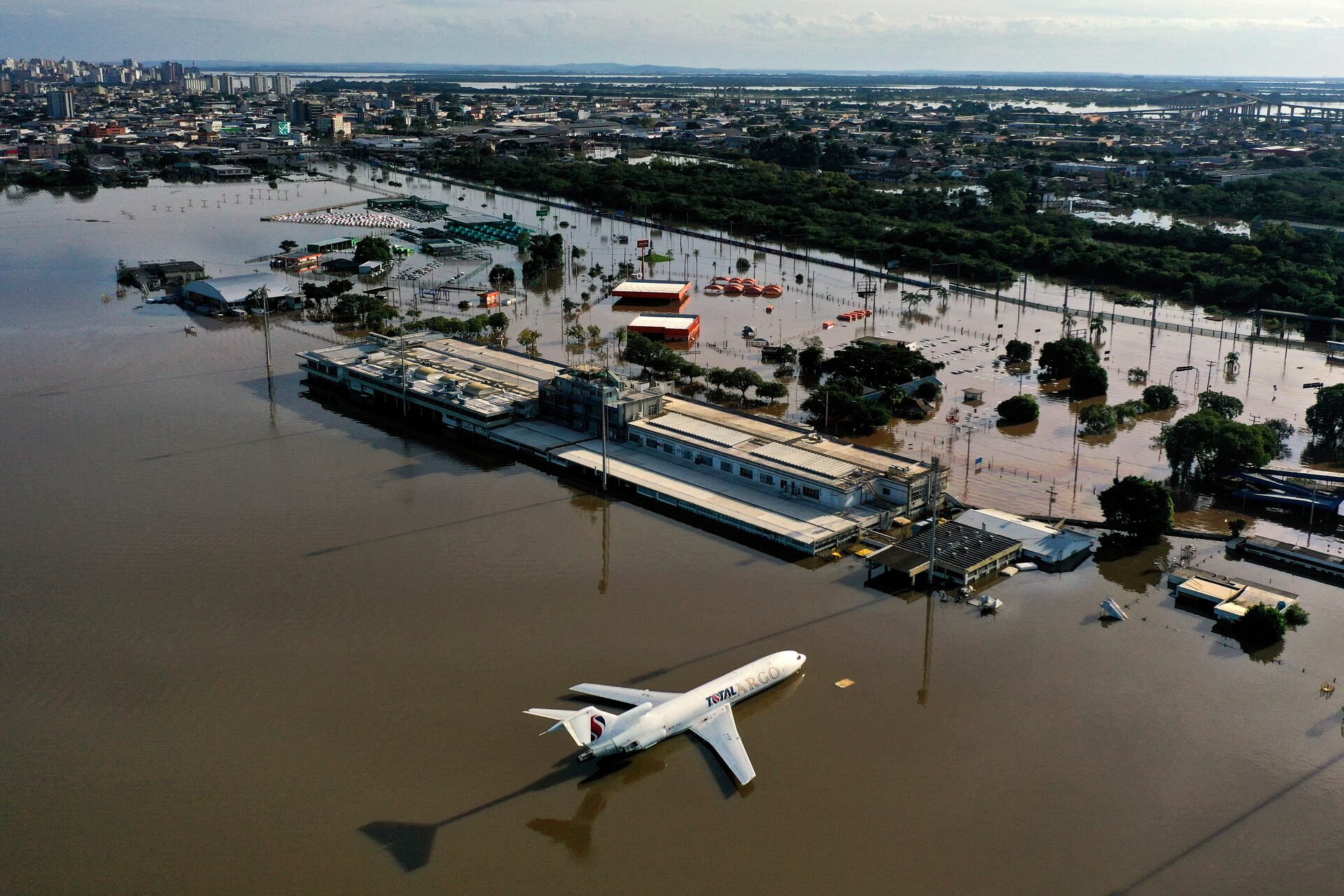
Photo Credits: Porto Alegre Airport, located in Rio Grande do Sul State, during the 2024 floods. Credit: G1
In May 2024, the skies over Rio Grande do Sul opened and did not close for weeks. Brazil’s southernmost state, home to over 11 million people, saw floodwaters engulf entire towns, displace nearly 600,000 residents, and generate damages exceeding $10 billion. It was the most severe climate disaster in the country’s recorded history, yet it did not arise without warning.
From the mudslides of Petrópolis to the droughts fragmenting the Amazon basin, Latin America has, over the past decade, been subjected to climate shocks of increasing magnitude. The response has, rightly, centred on mitigation: reducing emissions, reinforcing infrastructure, and restoring ecological systems. These are necessary undertakings, but they are not sufficient. When the storm subsides and the waters retreat, a second crisis emerges, less immediate yet equally consequential. It is the gradual reconstruction of livelihoods, the restoration of economic activity, and the reconstitution of communities. It is in this domain that preparedness remains notably limited.
The limitation lies in the assumption that physical resilience alone is adequate. It is not. A levee may prevent inundation, yet it cannot compensate a small business owner whose inventory has been erased overnight. More stringent building codes may reduce structural damage, but they cannot restore access to credit once local economies destabilise. The capacity to recover, which may be understood as financial resilience, constitutes an infrastructure in its own right, and one that warrants the same urgency as preventative measures.
Certain mechanisms addressing this gap already exist and merit consideration. Catastrophe bonds, commonly referred to as CAT bonds, enable governments and institutions to transfer disaster risk to capital markets. In stable conditions, investors receive favourable returns; in the event of a predefined catastrophe, capital is rapidly disbursed to finance recovery. FONDEN in Mexico illustrates the potential of such instruments. By establishing pre-arranged, rule-based financing, it avoids the bureaucratic delays that often slow aid when speed is essential.
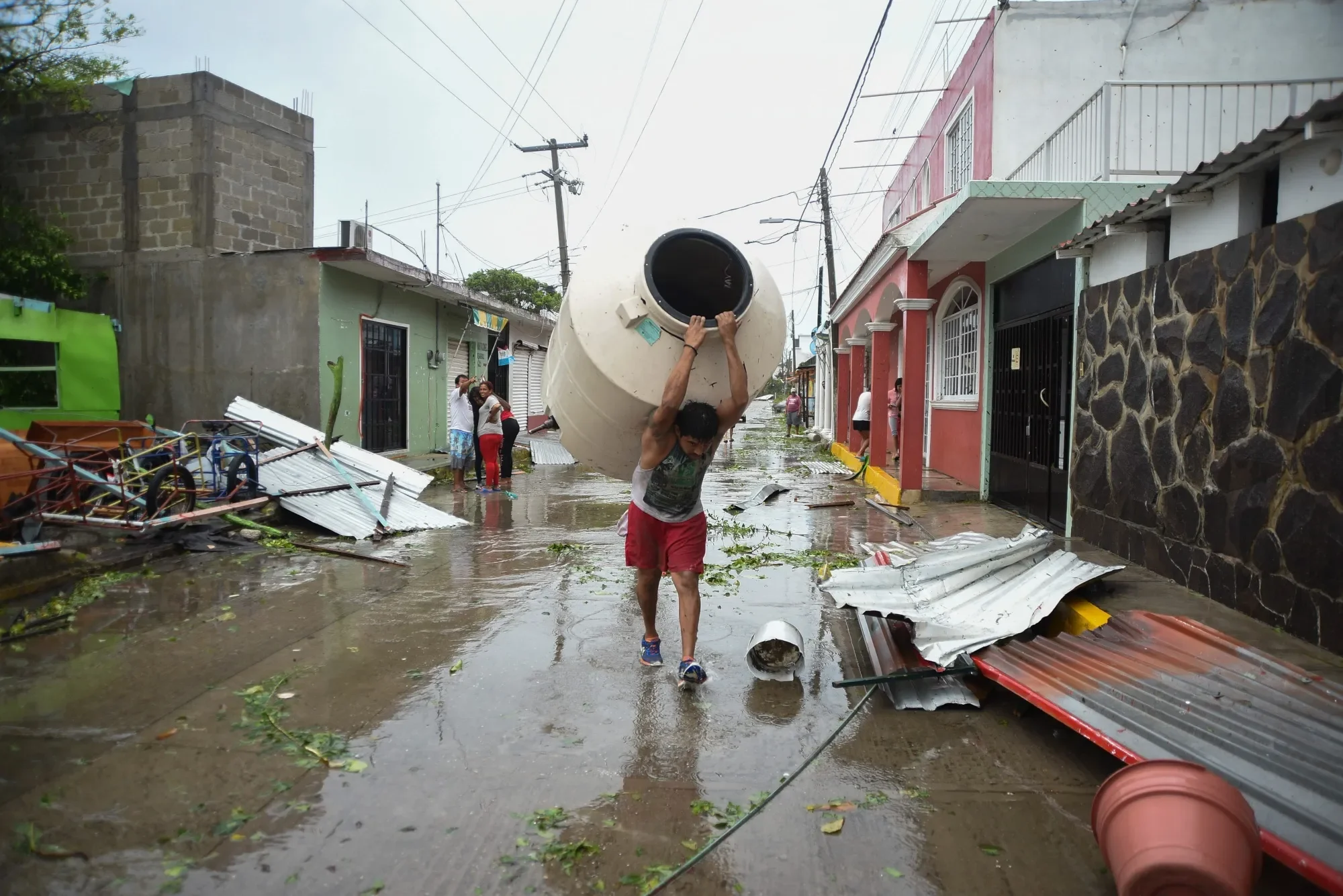
Photo Credits: A man carries a water tank after Hurricane Grace hit Veracruz State, Mexico, 2021. Photographer: Hector Adolfo Quintanar Perez (Bloomberg)
A similar approach can be observed in public-private disaster funds. When states, multilateral institutions such as the Inter-American Development Bank and the World Bank, and private capital invest jointly in recovery mechanisms before disaster strikes, they create systems capable of rapid and large scale deployment. These arrangements reduce the need for governments to choose between fiscal stability and humanitarian response in moments of crisis. While pilot programmes have been implemented across the Caribbean, their expansion throughout the continent remains limited.
Perhaps the most overlooked instrument is one that resists formal financial classification: the mutirão. Rooted in Brazilian rural tradition, the mutirão denotes organised collective labour, with communities pooling time, effort, and skill to reconstruct what formal systems fail to address. It does not replace markets, but complements them, compensating for their limitations. Contemporary adaptations, including community reconstruction funds, local cooperatives, and time banking systems linked to recovery, already operate in flood affected regions of the Northeast and the Sul. The challenge is not to romanticise such practices, but to integrate them, formalising their role within broader recovery frameworks so that social capital, already mobilised instinctively, can be deployed more efficiently and at greater scale.
The recurrence of such disasters is not hypothetical. The rains will return with greater intensity, and in regions less equipped to endure them. Latin America cannot afford to treat the financial dimension of climate recovery as secondary. The structures designed to channel capital in the aftermath of disaster are, in their own respect, as essential as those constructed to contain the waters themselves.
Last but not least, besides Haiti’s historical background, other explanations must exist to understand Haiti’s modern history. Jake Johnston, a writer and economist at the Center for Economic and Policy Research in Washington D.C., suggests that a possible explanation is the accumulation of failed military interventions and humanitarian aid. He argues that for aid to be productive and sustainable, it must involve direct collaboration with Haitians and address their needs. Johnston believes that international interventions have weakened the Haitian state, creating an environment where armed groups can thrive. This situation results from an unsustainable status quo established by foreign forces, that has marginalized a large part of the population, leaving them with no options, and leading some to take up arms due to a lack of opportunities.