

The Tariff Tailwind Latin America Can't Afford to Waste
By: Adriana Faraj
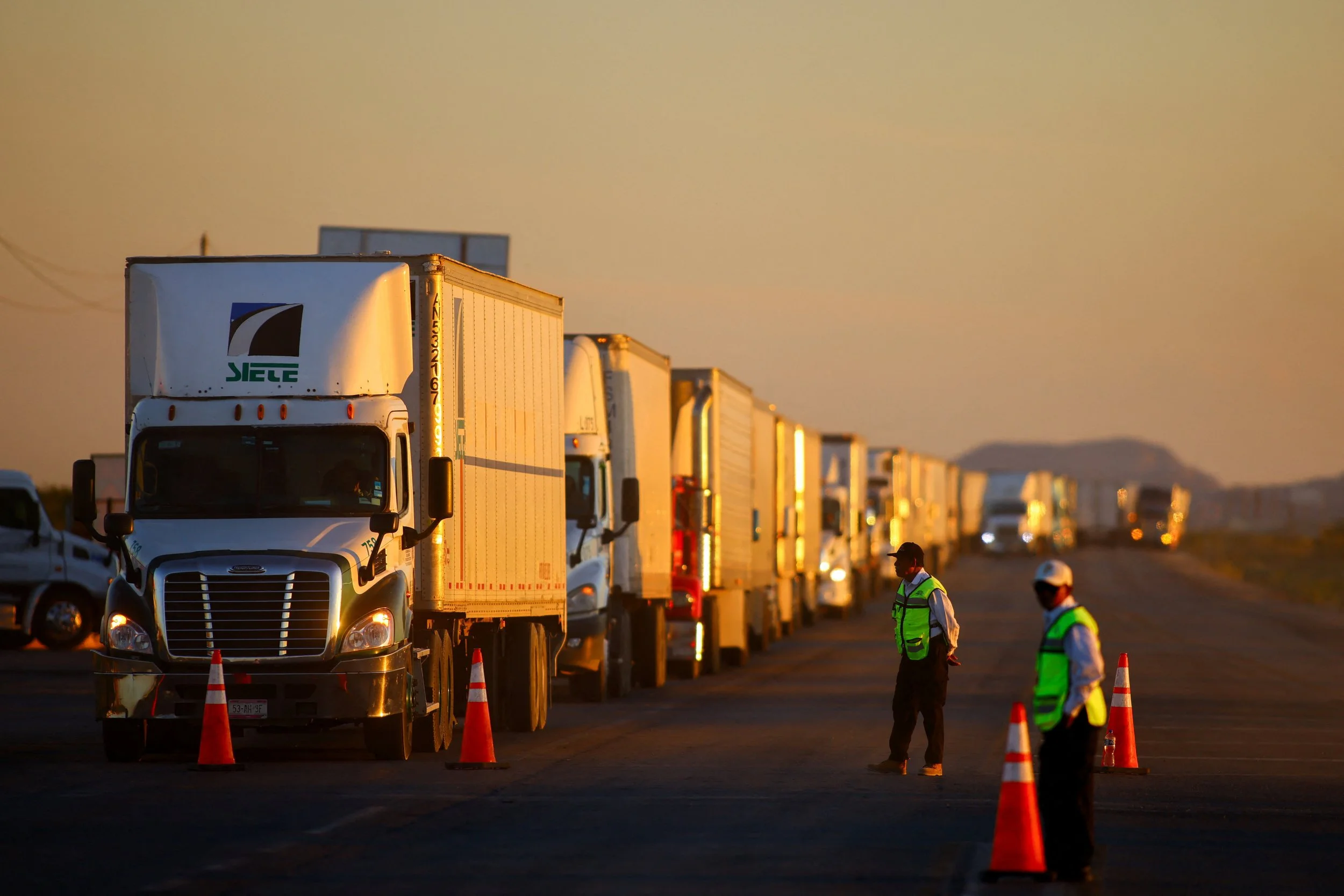
Photo Credits: Reuters
While the rollout of broad tariffs by the Trump Administration in early 2025 dominated the headlines, the story for Latin America is one of complexity, nuance, and, dare one say, excitement. While the headlines focused on the negative impacts of tariffs, a fundamental shift has been unfolding, one that Latin America has been awaiting for decades. The question, of course, is whether the region has the institutional heft to take advantage of this shift.
While the tariff environment has clearly been unstable, with the Supreme Court striking down tariffs based on IEEPA in February of 2026, President Trump immediately implemented a new 15% tariff across the globe. While the environment has clearly been one of uncertainty, one constant has been Latin America, and specifically Mexico, as a viable option to the Asian model of manufacturing.
The math is basic: China, Vietnam, and India, which may be subject to some of the highest tariffs, account for a combined $700 billion in exports of goods into the U.S., of which manufacturing products account for $550 billion of that figure. If a 40% country substitution effect is applied, then this equates to a $280 billion opportunity, which is the combined GDP of Costa Rica, the Dominican Republic, and Panama. LM is in a geographic position to reap a significant portion of this trend. Manufacturing labor rates in Honduras, Guatemala, and Nicaragua range from $1.50 to $2.50 per hour, which is significantly lower than the average of $4 per hour in Beijing, and products shipped from Mexico take only one or two days by truck or train, compared to 20-40 days by sea from China. Mexico has already begun quantifying its advantage in hard numbers. Foreign direct investment grew by more than 10% year-over-year, reaching $34.3 billion in the first half of 2025, of which 36% went into manufacturing. Global Trade Magazine Mexico surpassed China in 2024 as the top supplier of imports into the United States, with a total of $466.6 billion.
However, durability and momentum are not the same thing. Local infrastructure has reached its limits due to the concentration of nearshoring investment in Monterrey and the northern industrial belt. Additionally, cartels currently control about one-third of Mexico's territory, adding hidden costs that significantly reduce operating margins. Many foreign businesses considering nearshoring opportunities have also been impacted by Latinsight Mexico's judicial reforms, especially in industries like automotive, aerospace, and data centers that depend on renewable energy. Trade agreements and geography set the stage for investment, but they do not ensure it.
The vital link between potential and execution is infrastructure. In addition to a Green Corridors project to electrify and decarbonize important supply chain routes, Mexico is investing in a truck-specific elevated freight corridor between Monterrey and Laredo that will reduce traffic and shorten cross-border logistics timelines by several hours. The impending 2026 USMCA review highlights how urgent it is to close Mexico's logistics cost and efficiency gap; bolstering transportation infrastructure, improving security along vital freight corridors, and speeding up logistics digitalization are now necessary pillars for bolstering Mexico's standing within the regional framework.
The role of Central America is certainly underestimated in this story. Honduras, Guatemala, and El Salvador are much more predictable environments for labor-intensive manufacturing for a number of reasons, including labor costs, proximity to U.S. ports, and a lack of cartel territorial control. Retailers like H&M are already utilizing Central American sourcing as a supplement or replacement for northern Mexico exposure. According to the Center for Global Development, Central American countries are also among the most vulnerable to a U.S. tariff increase as a percentage of their GDP. The stakes of getting this right are existential.
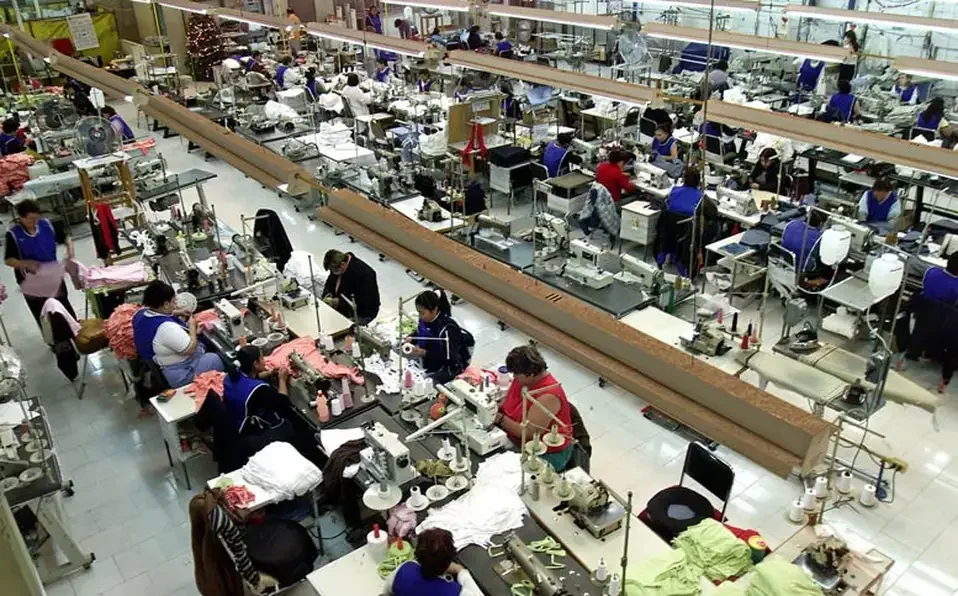
The current situation is a litmus test for institutional preparedness, especially for Honduras, a country whose manufacturing industry has traditionally relied on access to the U.S. market.
The maquila industry has for many years demonstrated that labor in Central America is capable of competing on quality with labor from anywhere else in the world. The ability of regional institutions to invest in their economies, rule of law, and their people in time to capture cutting-edge, high-end manufacturing before anyone else is still a matter for debate.
By creating a strong trade diversion effect, the nearshoring trend is changing supply chains in North America. The U.S. and Latin American suppliers with FTA access are reaping a lucrative business supplying inputs, but at the same time, Chinese and Asian suppliers are losing out to Mexico. The hemispheric supply web is created as Mexico attracts final assembly work, which in turn attracts derived demand for components from Brazil, Chile, Peru, and Central America. The paradox is that the trade shock that threatened Latin American integration might be the driver for its acceleration.
The window is open. The decisions made in Mexico City, Tegucigalpa, and San José in the next eighteen months will have a bigger impact on whether the region passes it than Washington's next tariff announcement.