

By: Mia Lopez-Oña
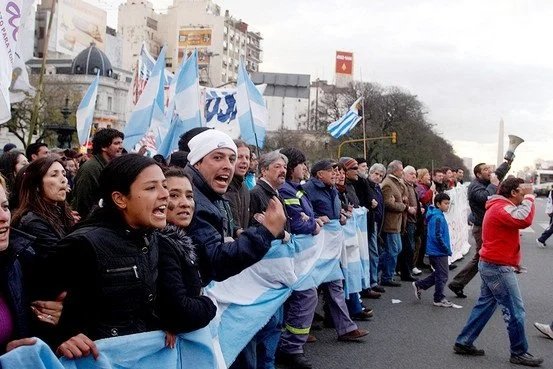
Photo credits: WSJ
For decades, Argentina has been trapped in a cycle. Inflation spikes, currency crises, and fiscal struggles have become expectations rather than spontaneous events. Even after transitions of power and policy changes, the pattern has remained, and to many, it seemed like it would never cease to exist. Now, with Javier Milei’s presidency, change may finally occur. While some people may not agree with his exact approach to the nation’s challenges, his attempt to resolve the array of problems is long overdue.
Critics of Milei fear the social costs of his reforms: public sector layoffs, reduced subsidies, and widespread protests. These concerns are valid. But anytime a country makes economic adjustments, it can burden people, especially those who were already struggling. Focusing on the short-term problems misses the bigger question: what if Argentina’s previous model was fundamentally unsustainable?
For years, Argentina was operating in a way that prioritized short-term relief over long-term stability. The government would spend more money than it had and then print more money to repay it, fueling inflation that made it harder for people to make purchases. Over time, this dynamic shaped the way people thought about money and the economy. Businesses planned for instability and priced accordingly. Consumers rushed to spend before prices rose. There was no trust in neither the economy nor the government, and the cycle would just keep repeating itself.
Milei is trying to change this and take responsibility. By aggressively cutting public spending and limiting state intervention, his administration is attempting to restore a sense of fiscal discipline that has been largely absent for decades. His goals represent a cultural shift. They challenge the expectation that the state will continuously intervene after individuals make poor economic choices, and instead emphasizes responsibility, market signals, and long-term credibility.
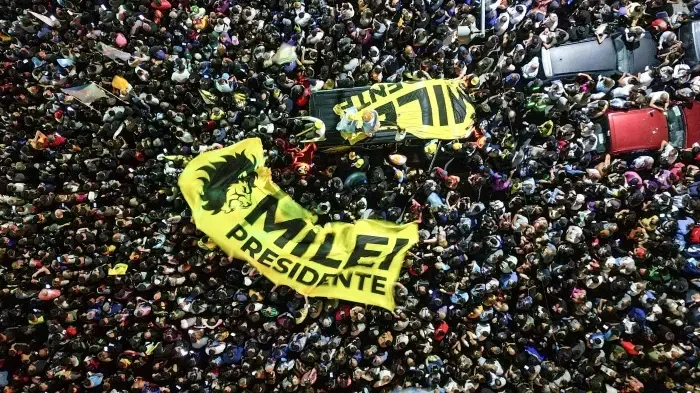
Like any presidency, Milei has his critics. Many of them argue that such an approach overlooks Argentina’s foundation, particularly its strong tradition of labor protections and collective bargaining.
The country’s history, shaped by Peronism and a deep-rooted emphasis on workers’ rights, makes these reforms especially disruptive. But this is precisely why the current moment is so significant. Milei is not operating within Argentina’s established economic culture. Instead, he is trying to redefine it.
The debate playing out across the country between those who want change and the people who do not is therefore not really about politics. It reflects a broader question about what kind of economic identity Argentina wants moving forward. Will it continue to rely on a model that has repeatedly produced instability, or will it accept the discomfort of transformation with the intention of crafting something more sustainable?
Nothing guarantees success. It is hard to make changes, and even harder to make sure they are successful in the long run. Milei’s policies could fail, or they could exacerbate inequality if not carefully managed. But the alternative of returning to a system that has consistently underperformed offers little reassurance.
The question we should be debating is not whether Milei’s reforms are too harsh. It is whether Argentina can afford to maintain an economic culture that has normalized crisis. Change, by definition, is uncomfortable. But in Argentina’s case, discomfort may be the necessary condition for stability.